
Plan for the carrots to soften
Cut the carrots into ½-inch slices so they can soften alongside the 1-inch squash cubes. Roast on an uncrowded tray, then simmer until a carrot piece crushes easily with a spoon. Start with 5 cups broth and adjust the thickness after blending.
Cold evenings call for a bowl of something warm, and this roasted butternut squash and carrot soup delivers comfort with simple ingredients. Roasting gives the vegetables golden edges and a deeper sweetness, while ginger, garlic, and thyme keep the flavor balanced. The result is a smooth, savory soup that feels creamy even before you add an optional splash of cream.
This winter soup works as a relaxed lunch, a starter for a holiday dinner, or a light supper with crusty bread. You will find exact quantities, clear cooking cues, practical substitutions, and make-ahead tips below. There is no need for specialty equipment beyond a baking sheet, a large pot, and a blender.
Jump to the recipe | Step-by-step instructions | Frequently asked questions
Why This Soup Is Perfect for Winter
Butternut squash stores well and brings a naturally silky texture to blended soups. Carrots add color and a gentle sweetness without overpowering the squash. Together, they create a hearty vegetable base that needs only a few seasonings to taste complete. Rather than relying on lots of cream, the recipe uses the vegetables themselves to give the broth body.
Roasting also makes preparation flexible. While the squash and carrots cook in the oven, you can soften the onion and prepare the toppings. Once everything is tender, the soup comes together quickly. It is easy to divide into containers for weekday lunches, and the flavor stays appealing after reheating.
The seasoning is deliberately mild. Fresh ginger adds warmth rather than strong heat, and thyme gives the sweetness a savory counterpoint. Lemon juice goes in at the end to brighten the bowl. Taste before adding it, then taste again afterward: a small amount can make the vegetables taste more distinct without making the soup noticeably lemony.
Roasted Butternut Squash and Carrot Soup Recipe
Yield: 6 servings, approximately 1½ cups each
Preparation: 20 minutes
Cooking: approximately 50 minutes, with some steps overlapping
Total: approximately 1 hour 10 minutes
Course: Lunch, dinner, or starter
Ingredients
- 2 pounds (900 g) peeled, seeded butternut squash, cut into 1-inch (2.5 cm) cubes
- 1 pound (450 g) carrots, peeled and cut into ½-inch (1.25 cm) thick slices
- 3 tablespoons olive oil, divided
- 1 large yellow onion, diced
- 3 garlic cloves, minced
- 1 tablespoon finely grated fresh ginger
- 1 teaspoon dried thyme, or 1 tablespoon fresh thyme leaves
- ½ teaspoon ground cumin
- 5 cups (1.2 liters) low-sodium vegetable broth, plus up to 1 cup extra as needed
- ¾ teaspoon fine salt, divided, plus more to taste
- ½ teaspoon freshly ground black pepper
- 1 tablespoon lemon juice, plus more to taste
- ½ cup (120 ml) heavy cream or unsweetened canned coconut milk, optional
- To serve: toasted pumpkin seeds, fresh thyme leaves, and an optional small drizzle of cream
Equipment
Use two rimmed baking sheets if one would crowd the vegetables, a large heavy-bottomed pot, a sturdy vegetable peeler, and an immersion blender or countertop blender. A flexible spatula helps lift the browned vegetables from the tray. For countertop blending, check that your blender is suitable for hot liquids and follow its instructions.
Choosing the Best Ingredients
Butternut squash
Choose a firm squash with an intact stem and no soft spots. The listed weight refers to the prepared flesh, so buy a whole squash weighing roughly 3 pounds, allowing for the peel and seeds. Sizes vary, making a kitchen scale useful here. Precut refrigerated squash is a convenient alternative; check that the pieces look fresh and cut any unusually large chunks to match the others.
To prepare a whole squash, place it on a stable cutting board and trim the ends. Separate the narrow neck from the round base, peel each section, and scoop out the seeds with a spoon. Cut a flat side before slicing so the squash does not roll. Take your time and use a sharp, sturdy knife rather than forcing a small blade through the flesh.
Carrots, broth, and aromatics
Regular orange carrots give the finished soup its warm color. Very thick carrots should be halved lengthwise before slicing so they roast at a similar rate to smaller ones. If the carrots are clean and their skins are thin, scrubbing is an option, although peeling produces a slightly smoother finish.
Low-sodium vegetable broth gives you better control over seasoning. Different brands vary considerably in saltiness and flavor, so reserve the final adjustment until after blending. Homemade broth works too. If you prefer a nonvegetarian base, the site’s guide to making bone broth offers another option; use a lightly seasoned batch so the vegetables remain the main flavor.
Step-by-Step Cooking Instructions
1. Roast the squash and carrots
Preheat the oven to 425°F (220°C). Toss the squash and carrots with 2 tablespoons olive oil, ½ teaspoon of the salt, and the black pepper. Spread them in a single layer on one large or two smaller rimmed baking sheets. Leave a little space between pieces; crowded vegetables tend to steam rather than brown.
Roast for 30–40 minutes, turning once around the halfway point. Start checking at 30 minutes. The vegetables are ready when a fork slides through easily and some edges are golden brown. If the carrots remain firm after the squash is tender, remove the squash and give the carrots a few more minutes. Tenderness matters more than hitting an exact time.
2. Build the savory base
While the vegetables roast, heat the remaining tablespoon of olive oil in a large pot over medium heat. Add the onion and remaining ¼ teaspoon salt. Cook for 7–9 minutes, stirring occasionally, until softened and translucent. Reduce the heat if the onion begins to catch or darken quickly.
Add the garlic, ginger, thyme, and cumin. Stir for about 1 minute, just until fragrant. Garlic can turn bitter if it burns, so have the broth ready. Pour in a small splash and scrape up any browned bits from the bottom of the pot, then add the remaining portion of the initial 5 cups of broth.
3. Simmer until everything is soft
Add the roasted squash and carrots to the pot. Scrape in the soft browned pieces from the trays, but leave behind any blackened bits. Bring to a gentle boil, reduce the heat, and simmer for 10 minutes. This short simmer lets the roasted vegetables and aromatic broth come together without a long additional cooking time.
Check a carrot piece before blending. It should crush easily against the side of the pot with a spoon. If it still resists, simmer for another 5 minutes and check again. Blending cannot fully disguise undercooked carrots, which can leave the soup grainy rather than silky.
4. Blend carefully
Remove the pot from the heat. If using an immersion blender, keep its blade head submerged and blend until smooth, moving slowly around the pot. Tilting the blender above the surface can splash hot soup. Pause occasionally to stir and check for any pieces hiding near the bottom.
For a countertop blender, allow the soup to cool enough for safe handling and follow the manufacturer’s hot-liquid guidance. Work in small batches and vent as instructed. Never blend hot soup in a sealed personal blender. Return each blended batch to the pot, then stir to make the texture even.
5. Adjust and serve
Stir in the optional cream or coconut milk. Add extra broth a little at a time until the soup pours easily from a ladle but still coats a spoon. Warm gently if needed. Finish with the lemon juice, then taste and adjust the salt and pepper. Avoid a vigorous boil after adding dairy.
Ladle into bowls and add pumpkin seeds and a few thyme leaves. A small swirl of cream is enough for contrast. Serve with toasted bread while the soup is warm. If serving several people, put the toppings in separate bowls so everyone can choose their own combination.
Tips for a Smooth, Flavorful Soup
Keep the vegetable pieces consistent. Similar sizes help everything cook evenly. The carrots are sliced thinner than the squash because they usually take longer to soften. Large carrot chunks can remain firm while small squash pieces begin to dry out.
Let the oven do the browning. Do not cover the roasting trays, and avoid piling the vegetables on top of one another. If your oven has hot spots, rotate the trays when you turn the vegetables. Dark edges are welcome; black, bitter patches are a sign to reduce the cooking time or heat slightly.
Add liquid gradually. It is easier to thin a thick soup than rescue a watery one. Start with the specified broth and make the final adjustment after blending. Squash varies in moisture, and roasting concentrates it differently depending on your tray and oven.
Balance sweetness with seasoning. Before reaching for more spice, try a pinch of salt or a little lemon juice. If the soup tastes flat, it often needs contrast rather than another large ingredient. Add small amounts and taste between adjustments so you do not overshoot.
Easy Variations and Substitutions
Dairy-free and vegan version
The base recipe is dairy-free and vegan when made with vegetable broth and no heavy cream. Leave the optional finish out entirely, or use unsweetened canned coconut milk. Coconut milk brings its own flavor, so begin with ¼ cup if you want a subtler result. Check packaged broth and toppings if cooking for someone with dietary restrictions.
Spiced winter variation
For a warmer spice profile, add ½ teaspoon smoked paprika with the cumin. A small pinch of chili flakes provides heat, while ¼ teaspoon ground coriander adds a citrus-like note. Avoid adding several new spices at once; the roasted squash should still taste clear rather than disappear under the seasoning.
Make it more filling
Add a drained, rinsed 15-ounce can of white beans with the roasted vegetables before simmering. Blend them into the soup and expect to use some additional broth. Alternatively, serve the soup with a cheese toast or top individual portions with cooked chickpeas. These additions change the yield, so portion according to appetite rather than assuming the original serving size.
What to Serve with Butternut Squash and Carrot Soup
Crusty bread is a natural partner because its chewy texture contrasts with the smooth soup. A grilled cheese sandwich makes a satisfying cold-weather lunch. For a lighter pairing, try a salad of crisp greens, apple slices, and a mustard dressing. The acidity helps balance the roasted vegetables’ sweetness.
For a winter gathering, serve smaller portions as a starter before a main course. If you are planning a holiday table, our classic green bean casserole recipe can join the menu as a separate side. Keep the soup garnish simple when the rest of the meal is rich.
Make-Ahead, Storage, and Reheating
You can roast the vegetables a day ahead, refrigerate them promptly in a covered container, and continue with the onion base when ready. Another option is to make the soup completely and keep the garnishes separate. It thickens as it stands, so reserve a little broth for reheating.
Divide leftover soup into shallow containers and refrigerate within 2 hours. Keep refrigerated for 3–4 days. Do not leave a large pot sitting on the counter until completely cold. For general leftover handling, see the USDA’s leftovers and food safety guidance.
Freeze in suitable containers with room for expansion for up to 3 months for best quality. For the most consistent texture, freeze before adding cream and stir it in after reheating. Thaw in the refrigerator. Warm on the stovetop, stirring regularly, and add broth as needed. Reheat leftovers to 165°F (74°C); use a food thermometer to check.
Common Problems and Simple Fixes
The soup is too thick: Stir in warm broth in small splashes. Give it a good stir before adding more, especially if it has been refrigerated. The correct texture is a preference, so stop when it suits your bowl and toppings.
The soup is too thin: Simmer uncovered over low heat, stirring often, until some liquid evaporates. A wide pot speeds this up. If you have reserved roasted vegetables, blend those in instead. Avoid adding dry flour directly, which can create lumps and a raw taste.
The texture is grainy: The carrots may need more cooking or the blender may need more time. Simmer gently until every piece is fully tender, then blend again. For an especially fine finish, pass the soup through a mesh sieve, although this is optional.
The flavor is too sweet: Add lemon juice a teaspoon at a time and check the salt. A pinch of black pepper or a little extra thyme can also help. Sweetened coconut beverages are unsuitable here because they can push the flavor further toward dessert.
Frequently Asked Questions
Can I use frozen butternut squash?
Yes. Roast it from frozen on a spacious tray, following any package guidance. It may release more water and brown less than fresh squash. Continue until tender, and hold back some broth initially if the vegetables seem especially wet.
Do I have to roast the vegetables?
Roasting gives this recipe its deeper flavor, but a stovetop version is possible. Add the raw squash and carrots to the onion base with the broth and simmer until fully tender, usually 25–35 minutes depending on size. The result will taste milder and less caramelized.
Can I make the soup without cream?
Absolutely. The squash thickens the soup naturally when blended. Cream is an optional finish for richness, not an essential thickener. Use a little extra broth if needed and add toasted seeds for texture.
Can I substitute another winter squash?
Kabocha or a firm cooking pumpkin can work using the same prepared weight. Peel if needed and roast until tender. Their moisture and sweetness vary, so adjust the broth and lemon juice after blending rather than changing everything at the start.
How can I prepare this for guests?
Make the soup the day before and reheat it gently before serving. Set out warmed bowls, prepare the toppings, and toast the bread shortly before the meal. Thin with broth as necessary, then taste once more because reheating can change the balance.
A Cozy Bowl for Cold Evenings
This roasted butternut squash and carrot soup brings together tender vegetables, gentle spices, and a smooth texture in a straightforward winter meal. Give the vegetables enough room to brown, cook the carrots until soft, and finish with a little acidity. Those small details make the bowl feel balanced and satisfying. Add your favorite bread, choose a crunchy topping, and enjoy a comforting meal that is just as useful for tomorrow’s lunch.
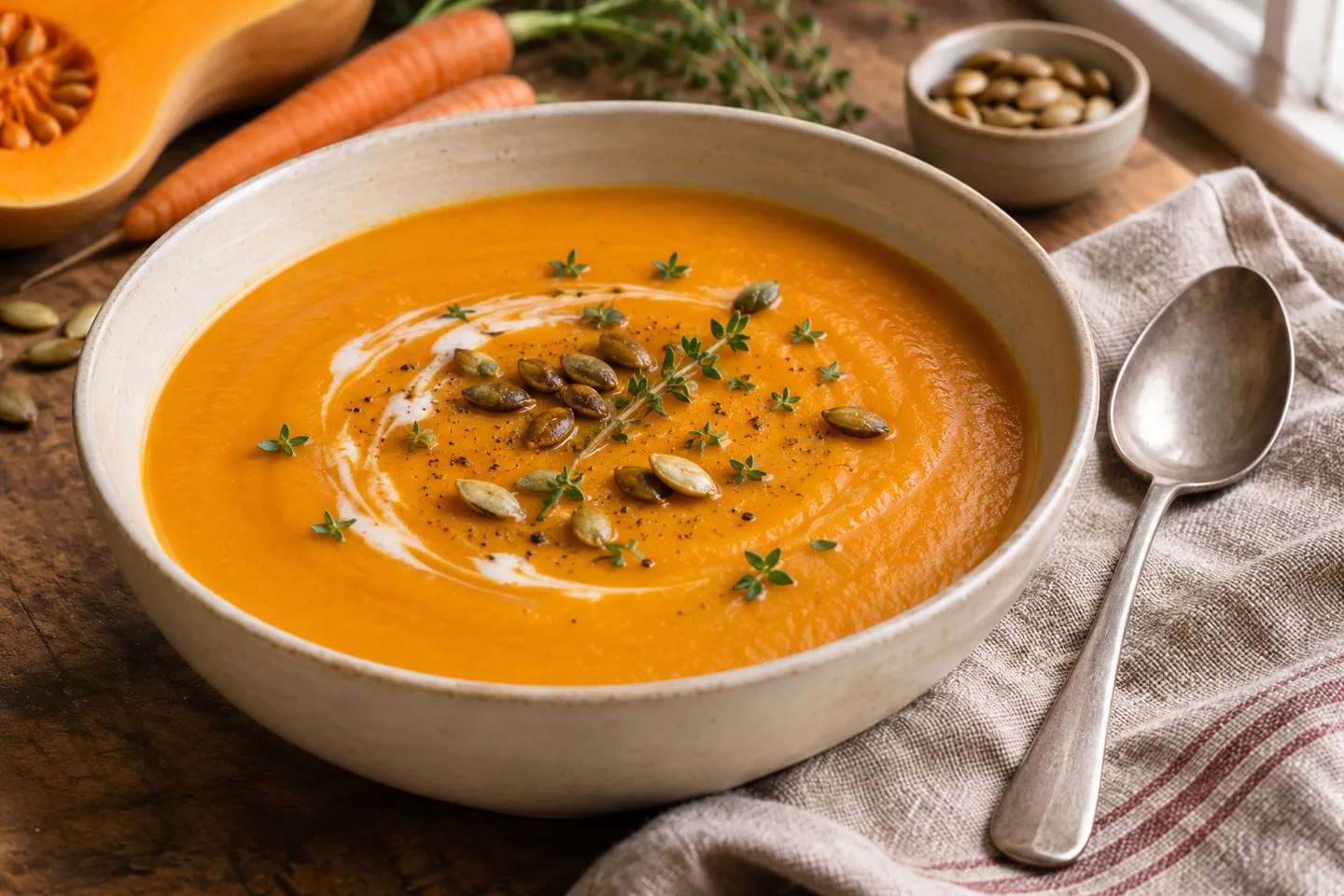
Roasted Butternut Squash and Carrot Soup
Ingredients
Method
- Preheat the oven to 425°F (220°C). Toss the squash and carrots with 2 tablespoons olive oil, ½ teaspoon of the salt, and the black pepper. Spread them in a single layer on one large or two smaller rimmed baking sheets. Leave a little space between pieces; crowded vegetables tend to steam rather than brown.
- Roast for 30–40 minutes, turning once around the halfway point. Start checking at 30 minutes. The vegetables are ready when a fork slides through easily and some edges are golden brown. If the carrots remain firm after the squash is tender, remove the squash and give the carrots a few more minutes. Tenderness matters more than hitting an exact time.
- While the vegetables roast, heat the remaining tablespoon of olive oil in a large pot over medium heat. Add the onion and remaining ¼ teaspoon salt. Cook for 7–9 minutes, stirring occasionally, until softened and translucent. Reduce the heat if the onion begins to catch or darken quickly.
- Add the garlic, ginger, thyme, and cumin. Stir for about 1 minute, just until fragrant. Garlic can turn bitter if it burns, so have the broth ready. Pour in a small splash and scrape up any browned bits from the bottom of the pot, then add the remaining portion of the initial 5 cups of broth.
- Add the roasted squash and carrots to the pot. Scrape in the soft browned pieces from the trays, but leave behind any blackened bits. Bring to a gentle boil, reduce the heat, and simmer for 10 minutes. This short simmer lets the roasted vegetables and aromatic broth come together without a long additional cooking time.
- Check a carrot piece before blending. It should crush easily against the side of the pot with a spoon. If it still resists, simmer for another 5 minutes and check again. Blending cannot fully disguise undercooked carrots, which can leave the soup grainy rather than silky.
- Remove the pot from the heat. If using an immersion blender, keep its blade head submerged and blend until smooth, moving slowly around the pot. Tilting the blender above the surface can splash hot soup. Pause occasionally to stir and check for any pieces hiding near the bottom.
- For a countertop blender, allow the soup to cool enough for safe handling and follow the manufacturer’s hot-liquid guidance. Work in small batches and vent as instructed. Never blend hot soup in a sealed personal blender. Return each blended batch to the pot, then stir to make the texture even.
- Stir in the optional cream or coconut milk. Add extra broth a little at a time until the soup pours easily from a ladle but still coats a spoon. Warm gently if needed. Finish with the lemon juice, then taste and adjust the salt and pepper. Avoid a vigorous boil after adding dairy.
- Ladle into bowls and add pumpkin seeds and a few thyme leaves. A small swirl of cream is enough for contrast. Serve with toasted bread while the soup is warm. If serving several people, put the toppings in separate bowls so everyone can choose their own combination.